Skip to content
wpaiworkflowautomation-logo AI Workflow Automation
  • Demos
  • Overview
  • Features
  • Price
  • Documentation
  • Blog
Download free
  • Demos
  • Overview
  • Features
  • Price
  • Documentation
  • Blog
Download free

Introduction

3
  • Overview of AI Workflow Automation Pro
  • Key Features and Benefits
  • System Requirements

Installation and Activation

2
  • How to Install AI Workflow Automation Pro
  • Initial Setup and Configuration

Getting Started

4
  • Welcome Screen & Templates Modal
  • Understanding AI Workflow Automation WordPress plugin: A Deep Dive
  • Quick Start Guide
  • Understanding the User Interface

Core Concepts

6
  • Workflows Explained
  • Nodes and Their Types
  • Edges and Connections
  • Triggers and Actions
  • Data Flow and Variable Handling
  • Execution and Scheduling

Node Types

16
  • MCP Node
  • Create File Node
  • Multimedia Generator Node
  • Chat Node
  • API Call Node
  • Unsplash Image Search Node
  • Trigger Nodes
  • AI Model Node
  • Specialized AI Nodes
  • Output Node
  • Human Input Node
  • Condition Node
  • Post Node
  • Send Email Node
  • Web Scraper/Crawler node
  • Parser Node

Trigger Nodes

8
  • Ninja Forms Integration
  • WPForms Integration
  • Contact Form 7 Integration
  • RSS Trigger Node
  • Gravity Forms Trigger
  • Webhook Trigger
  • WordPress Core Trigger
  • Workflow Trigger

AI Nodes

6
  • Research Node
  • Sentiment Analysis Node
  • Summary Generator Node
  • Extract Information Node
  • Write Article Node
  • Optimize SEO Node

Output Nodes

5
  • Save to Google Sheets
  • Save to Google Drive
  • Save to Database
  • Webhook Output
  • HTML/Shortcode Output

Building Workflows

2
  • Step-by-step Guide to Creating Workflows
  • Automatically generate a content creation workflow using AI-Powered workflow generator

Advanced Features

4
  • Cost Management
  • Retrieval-Augmented Generation (RAG)
  • Annotation Tools
  • Workflow Import/Export

API Documentation

2
  • Google Integration Setup
  • API Settings and Integrations

FAQ

1
  • Security Overview
View Categories
  • Home
  • Docs
  • Node Types
  • MCP Node

MCP Node

2 min read

MCP Node Usage Guide #

Overview #

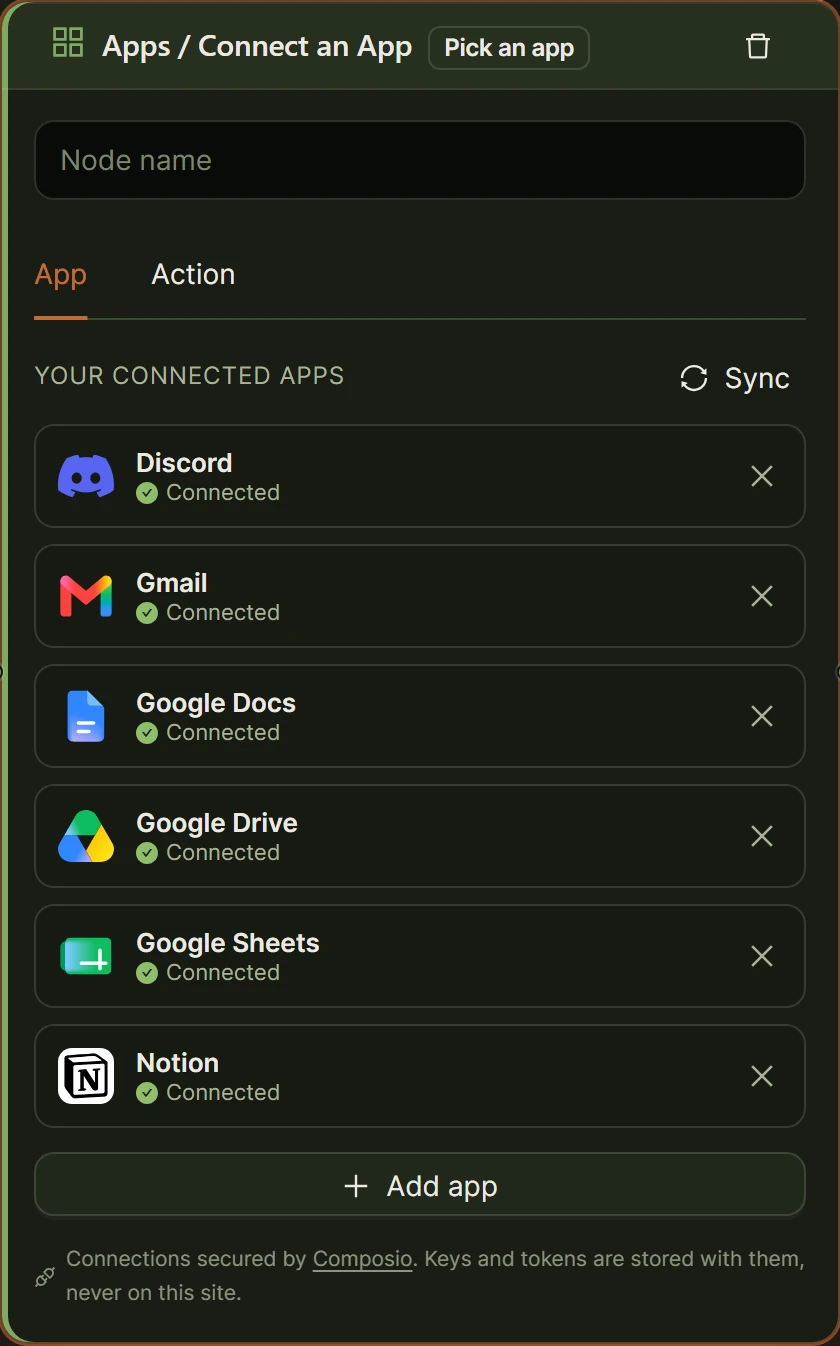
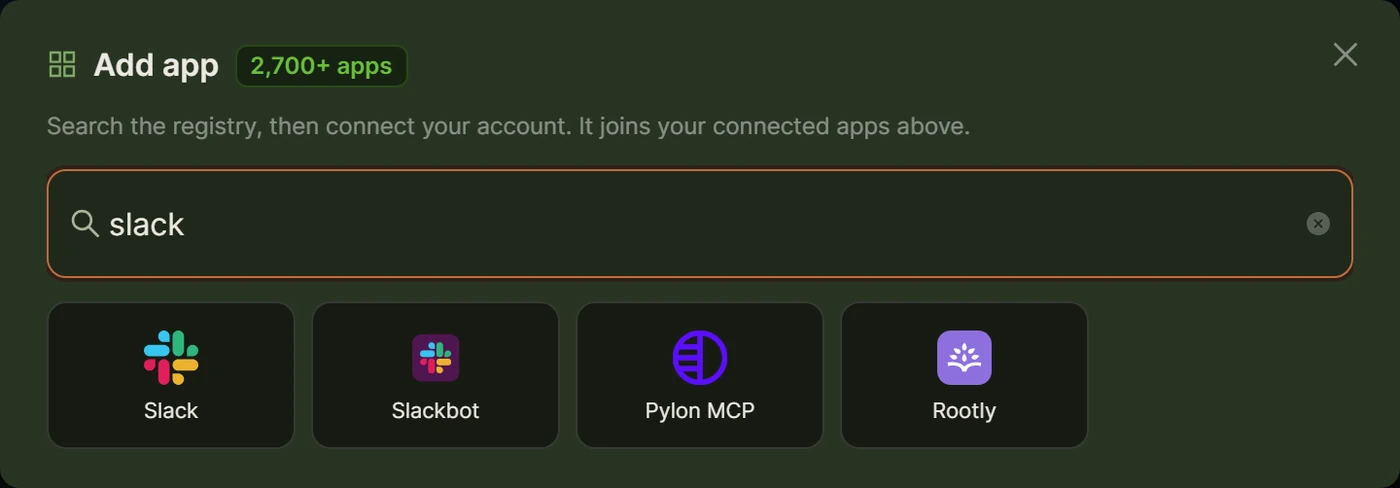
The MCP (Model Context Protocol) node allows you to integrate external services and APIs into your WordPress AI workflows. It supports both preset services (Slack, GitHub, Gmail, etc.) and custom MCP servers.

MCP Node

Setting Up MCP Nodes in Workflows #

1. Basic Configuration #

  • Node Name: Give your MCP node a descriptive name
  • Server Type: Choose from preset services or “Custom”
  • Authentication: Enter required credentials (API keys, tokens, etc.)
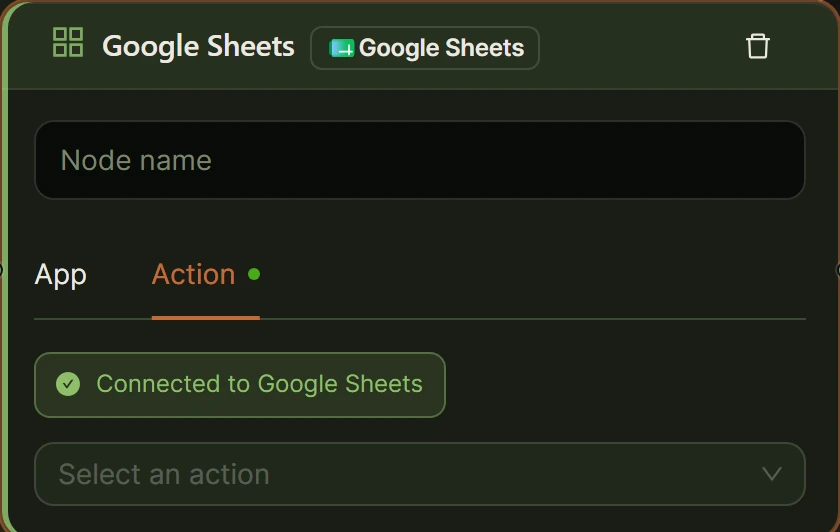
  • Tool Selection: Select the specific action/tool to execute
  • Parameters: Configure the parameters for your selected tool

2. Using Input Tags #

MCP nodes support dynamic input from other nodes using tags:

[[node-id]]              - Get full output from a node
[[field] from node-id]   - Get specific field from a node

Examples: #

  • Send Slack message with AI-generated content:
    Channel: #general
    Text: [[aiModel-1]]
    
  • Create GitHub issue from form submission:
    Title: [[subject] from trigger-1]
    Body: [[description] from trigger-1]
    

3. Preset Service Examples #

Slack Integration #

{
  "serverType": "slack",
  "selectedTool": "send_message",
  "connectionConfig": {
    "bot_token": "xoxb-your-bot-token"
  },
  "toolParameters": [
    {"name": "channel", "value": "#notifications"},
    {"name": "text", "value": "New workflow completed: [[trigger-1]]"}
  ]
}

GitHub Integration #

{
  "serverType": "github",
  "selectedTool": "create_issue",
  "connectionConfig": {
    "access_token": "ghp_your_token"
  },
  "toolParameters": [
    {"name": "repo", "value": "owner/repository"},
    {"name": "title", "value": "[[title] from humanInput-1]"},
    {"name": "body", "value": "[[content] from aiModel-1]"}
  ]
}

Gmail Integration #

{
  "serverType": "gmail",
  "selectedTool": "send_email",
  "connectionConfig": {
    "access_token": "your_oauth_token"
  },
  "toolParameters": [
    {"name": "to", "value": "[[email] from trigger-1]"},
    {"name": "subject", "value": "Your AI-Generated Report"},
    {"name": "body", "value": "[[output-1]]"}
  ]
}

4. Custom MCP Server Configuration #

For custom MCP servers, you need to provide:

HTTP/HTTPS Server #

{
  "serverType": "custom",
  "customServerConfig": {
    "name": "My Custom API",
    "connectionType": "http",
    "endpoint": "https://api.example.com",
    "authFields": [
      {"key": "X-API-Key", "value": "your-api-key"}
    ]
  },
  "selectedTool": "custom_action",
  "toolParameters": [
    {"name": "input", "value": "[[aiModel-1]]"}
  ]
}

Local Process (stdio) #

{
  "serverType": "custom",
  "customServerConfig": {
    "name": "Local Python Script",
    "connectionType": "stdio",
    "command": "python",
    "args": ["/path/to/mcp_server.py"]
  },
  "selectedTool": "process_data",
  "toolParameters": [
    {"name": "data", "value": "[[parser-1]]"}
  ]
}

Common Use Cases #

1. Notification Workflow #

Trigger → AI Model → MCP (Slack) → Output

  • Form submission triggers workflow
  • AI generates summary
  • MCP sends Slack notification
  • Output saves to database

2. Content Publishing Workflow #

RSS → AI Model → MCP (GitHub) → MCP (Gmail)

  • RSS feed provides new content
  • AI rewrites/summarizes
  • MCP creates GitHub issue
  • MCP sends email notification

3. Data Processing Workflow #

API Call → Parser → MCP (PostgreSQL) → Output

  • Fetch data from API
  • Parse/transform data
  • Store in PostgreSQL via MCP
  • Display results

Working with Complex Parameters #

JSON Arrays #

Some tools expect JSON arrays. Format them as strings:

Query Texts: ["search term 1", "search term 2"]
Documents: [{"id": 1, "text": "content"}, {"id": 2, "text": "more"}]

Nested Objects #

For complex data structures:

Data: {"user": {"name": "[[name] from trigger-1]", "email": "[[email] from trigger-1]"}}

Dynamic Lists #

Use AI to generate formatted lists:

Attendees: [[aiModel-1]]  // AI outputs: "email1@example.com, email2@example.com"

Error Handling #

  1. Authentication Errors: Double-check API keys and tokens
  2. Parameter Errors: Ensure required parameters are provided
  3. Format Errors: Validate JSON syntax for array/object parameters
  4. Connection Errors: Verify server endpoints and network access

Best Practices #

  1. Test First: Always test your MCP configuration before adding to production workflows
  2. Use Templates: Start with tool templates and modify as needed
  3. Secure Credentials: Store sensitive tokens in WordPress options, not in workflow JSON
  4. Error Recovery: Add condition nodes after MCP nodes to handle failures
  5. Rate Limiting: Be aware of API rate limits for external services

Troubleshooting #

MCP Node Not Executing #

  • Check execution logs in WordPress admin
  • Verify all required parameters are filled
  • Test the connection using the “Test” button

Invalid Response #

  • Check the API documentation for expected response format
  • Verify authentication is working
  • Look for error messages in the execution details

Parameter Issues #

  • Ensure JSON is properly formatted
  • Check that input tags are resolving correctly
  • Verify data types match API expectations
Updated on August 5, 2025

What are your Feelings

  • Happy
  • Normal
  • Sad
Share This Article :
  • Facebook
  • X
  • LinkedIn
  • Pinterest

Leave a reply

Your email address will not be published. Required fields are marked *

Table of Contents
  • MCP Node Usage Guide
    • Overview
    • Setting Up MCP Nodes in Workflows
      • 1. Basic Configuration
      • 2. Using Input Tags
        • Examples:
      • 3. Preset Service Examples
        • Slack Integration
        • GitHub Integration
        • Gmail Integration
      • 4. Custom MCP Server Configuration
        • HTTP/HTTPS Server
        • Local Process (stdio)
    • Common Use Cases
      • 1. Notification Workflow
      • 2. Content Publishing Workflow
      • 3. Data Processing Workflow
    • Working with Complex Parameters
      • JSON Arrays
      • Nested Objects
      • Dynamic Lists
    • Error Handling
    • Best Practices
    • Troubleshooting
      • MCP Node Not Executing
      • Invalid Response
      • Parameter Issues
wpaiworkflowautomation-logo AI Workflow Automation
+--+  +--+
|  *--+  |
+--+  +--+
|  +--*  |
+--+  +--+

Agentic AI workflows, built visually inside WordPress. Free and open to build on — cloud when you need the muscle.

Product

  • Features
  • How it runs
  • Pricing
  • Credits

Resources

  • Case Study
  • Blog Posts
  • E-commerce
  • Content Creation
  • Real Estate
  • Finance
  • Education
  • Guide

Company

  • Contact
  • Affiliates

Legal

  • Privacy Policy
  • Terms and Conditions
  • Cookie Policy (UK)
  • Cookie Policy (EU)
automation
© 2026 AI Workflow Automation wpaiworkflowautomation.com
Manage Consent
To provide the best experiences, we use technologies like cookies to store and/or access device information. Consenting to these technologies will allow us to process data such as browsing behavior or unique IDs on this site. Not consenting or withdrawing consent, may adversely affect certain features and functions.
Functional Always active
The technical storage or access is strictly necessary for the legitimate purpose of enabling the use of a specific service explicitly requested by the subscriber or user, or for the sole purpose of carrying out the transmission of a communication over an electronic communications network.
Preferences
The technical storage or access is necessary for the legitimate purpose of storing preferences that are not requested by the subscriber or user.
Statistics
The technical storage or access that is used exclusively for statistical purposes. The technical storage or access that is used exclusively for anonymous statistical purposes. Without a subpoena, voluntary compliance on the part of your Internet Service Provider, or additional records from a third party, information stored or retrieved for this purpose alone cannot usually be used to identify you.
Marketing
The technical storage or access is required to create user profiles to send advertising, or to track the user on a website or across several websites for similar marketing purposes.
Manage options Manage services Manage {vendor_count} vendors Read more about these purposes
View preferences
{title} {title} {title}
Manage Consent
To provide the best experiences, we use technologies like cookies to store and/or access device information. Consenting to these technologies will allow us to process data such as browsing behavior or unique IDs on this site. Not consenting or withdrawing consent, may adversely affect certain features and functions.
Functional Always active
The technical storage or access is strictly necessary for the legitimate purpose of enabling the use of a specific service explicitly requested by the subscriber or user, or for the sole purpose of carrying out the transmission of a communication over an electronic communications network.
Preferences
The technical storage or access is necessary for the legitimate purpose of storing preferences that are not requested by the subscriber or user.
Statistics
The technical storage or access that is used exclusively for statistical purposes. The technical storage or access that is used exclusively for anonymous statistical purposes. Without a subpoena, voluntary compliance on the part of your Internet Service Provider, or additional records from a third party, information stored or retrieved for this purpose alone cannot usually be used to identify you.
Marketing
The technical storage or access is required to create user profiles to send advertising, or to track the user on a website or across several websites for similar marketing purposes.
Manage options Manage services Manage {vendor_count} vendors Read more about these purposes
View preferences
{title} {title} {title}